WE NOTE THAT THE FOLLOWING TRANSCRIPT WAS CREATED BY A ROBOT SO PLEASE FORGIVE ANY TYPOS.
[Tom Zuber]
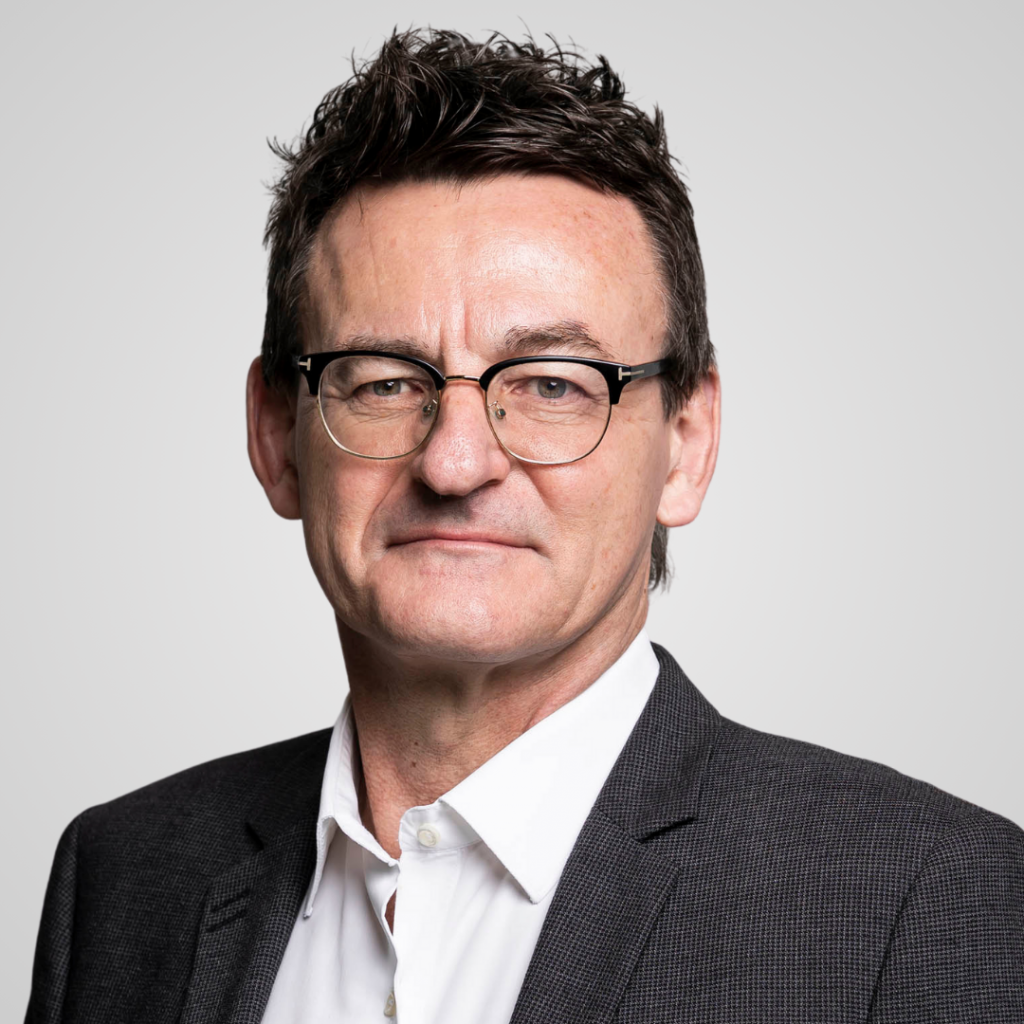
Hello, I’m Tom Zuber. I’m the managing partner of Zuber Lawler. We’re a law firm based in the United States that represents clients throughout the world. I’m delighted to be here with Andrew Dzurak, the CEO of Diraq, and Andrew, welcome. Could you please tell us a bit about yourself? Just introduce yourself where you’re based and then we’ll get on with the interview, which I’m very excited about.
[Andrew Dzurak]
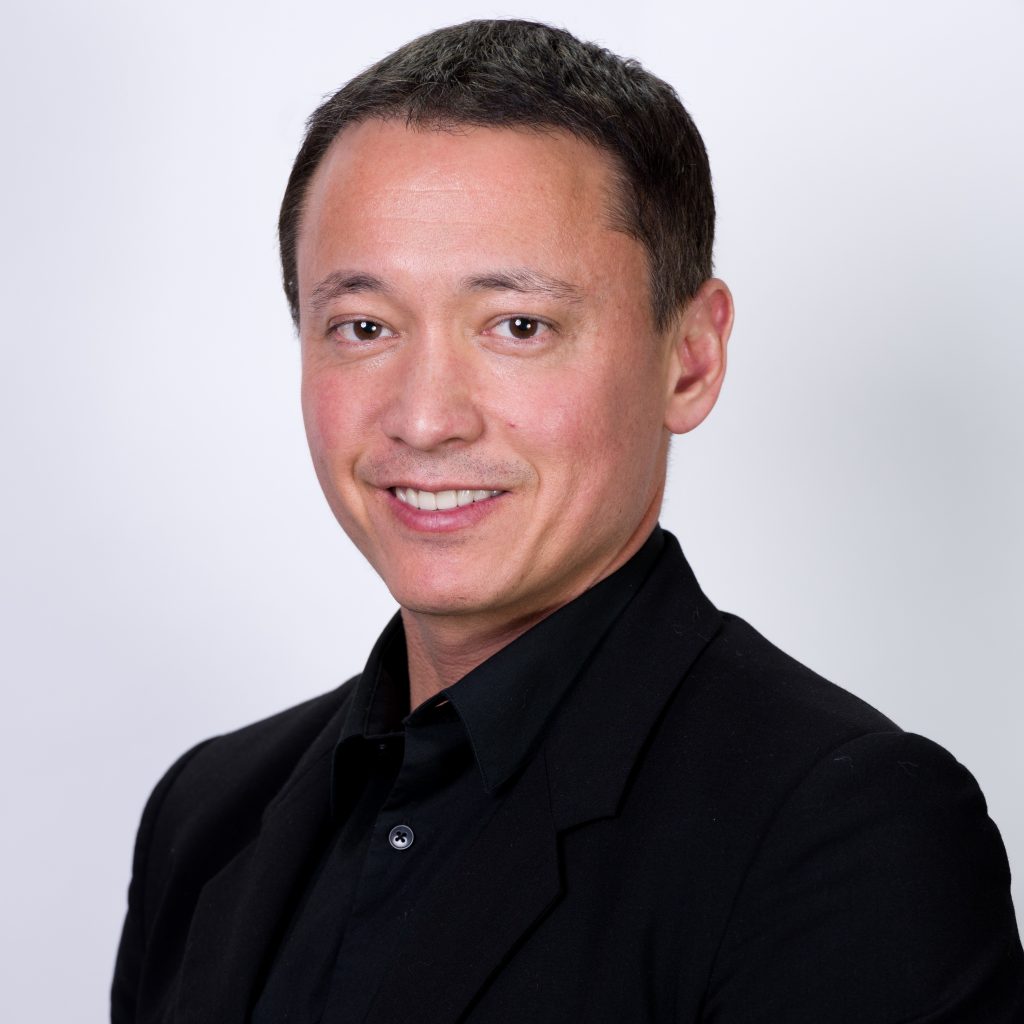
Sure, sure. So I set the company direct up in 2022 just over three years ago, we spun out of local university in Sydney, University of New South Wales, big research university, where I’ve been a professor there for about 20 years and still have an affiliation, but now my focus is 100% on to direct we’ve got about 50 people around the world, most of them based here in Sydney, where we have our core laboratories, but we incorporated in the US last year, operations in Silicon Valley in Boston, and soon to have a lab in Chicago as well. So very much going global, and see ourselves very much as a Aussie US company.
[Tom Zuber]
Very exciting. Andrew, let’s start by talking about Silicon Quantum Dot technology. Could you briefly explain what’s unique about this approach to quantum computing and why it matters so much to experts and the broader public.
[Andrew Dzurak]
Yeah, so our technology is, in fact, based on just a variant of the same chips you have in your phones and laptops. So the technology is commonly called Silicon CMOS technology. I won’t explain why, where the acronym comes from, but it’s the way that all of our chips are made in phones and laptops, and it’s based on transistor devices. These are tiny electronic switches, and we typically have around about 100 billion of them on a square centimeter of silicon sitting in your phone or laptop, right? So what my group when I was a professor, as a research professor, we showed that we could convert one of those silicon transistors into a quantum bit to do quantum processing. And the great advantage of that is twofold. Firstly, they’re incredibly small, very similar to the size of today’s transistors, so you can get many hundreds of millions onto single chips. So that means that we can keep the cost and size of our quantum computers down. And the other nice thing is we can make our quantum chips in the same chip making facilities, commonly called chip foundries, where we make standard chips. So it makes the manufacturing more straightforward.
[Tom Zuber]
There’s a boast on your website, which I find to be very intriguing, ambitious and kind of epic, frankly, your goal is to get billions of qubits into a single system. Here, tell us a bit about that, the one that’s a very ambitious goal. How are you doing in the context of that goal, what’s your timeline? What do you think are the ramifications of your success you achieve it? That would be great to know.
[Andrew Dzurak]
Yeah. Well, this is our complete focus to achieve that goal. The reason that we can do it is, as I just said, the size of our quantum bits are similar size to transistors. That means we can get, at the moment, even without changing any semiconductor technologies, we can get around 100 million onto a single chip. And so that means that with a few chips, we can easily get to around a billion in something that you know you could hold in your hand, right? And that means you may know that there’s a whole range of different technologies being explored for quantum computing, from superconducting circuits through to ion traps. And you know, for types, all of those technologies are limited in the number that they can get in a single module. And so in order to get to the number of qubits that are really required for really valuable operations, which is typically expected in the many millions other technologies have to put things together, because our chips are so small, we can get the whole thing in one unit, in one refrigeration system, and it keeps the whole thing compact. It makes it incredibly cheap to run so very low electricity costs to operate it. And from our perspective, this is going to be crucial if quantum computing is really going to be world changing, which we think it can be. But to do that, you’ve got to make it affordable. You can’t be selling quantum computers for a billion dollars.
[Tom Zuber]
Well, let’s stay on that notion of affordability, the cooling system that’s required. Does this have any ramifications on the on that, on the size of that, on the threshold required to achieve sufficient cooling, on the level or degree of cooling itself? Any any ramifications there on your approach?
[Andrew Dzurak]
Huge ramifications, because the physical size of this is. Them is so small, it means that you don’t have to cool as much material. You’re just cooling a few chips and modern day refrigeration units comfortably. I mean, they actually go down to a fraction of one degree above absolute zero. We sit a little warmer. We sit at one degree above absolute zero, but because we’re only cooling, you know, a couple of chips at that size. It means that we can do all of this in a in a refrigerator, pretty similar to the refrigerator in your home. Okay, it’s just, you know, it’s about the size of a rack in a data center. So much, much lower cooling. The energy requirements for the cooling are much, much lower. In fact, you know, we estimate that the classical processing that’s needed to sit alongside the quantum processing, this is classical processing that does what’s called quantum error correction. We use almost as much energy, or comparable energy, to our refrigeration system, right? And that’s something that everyone needs, yeah. What sort of cube it is. So this is about as energy efficient as you can possibly get for quantum computing.
[Tom Zuber]
That is fascinating, very intriguing. And I’ll confess, Andrew, it’s a little bit scary at the at the power that’s going to be held in a system like this in a more compact size. Let’s talk about the path towards solving real world problems, and what that question I’m going to ask at first seems like it’s question that could be directed at anybody in the industry in your position, but I mean also in terms of Diraq’s timeline in your own perspective on this. Can you share an example of how Diraq’s technology could solve real world problems today or in the near future?
[Andrew Dzurak]
Yeah, so at the moment, so worth noting that this silicon Quantum Dot technology has only been demonstrated to be made, to be manufacturable in standard chip foundries, just in the last couple of years, right? So, you know, we only launched three years ago, and we were doing things in a research environment. So only since we launched it, we’ve been able to start manufacturing. And we manufacture our chips at foundries, including IMEC in Europe and Global Foundries in the US. So because of that, we’re still our devices are still at the kind of handful of qubits level, that’s where we’re operating. And there’s really nothing meaningful that you can do with that you can do, you know, very basic quantum physics demonstrations, but that’s not, that’s not commercially useful. So we’re focused on getting a commercial product in 2029 that will be commercially useful. On our website, you’ll see that we say 1000 plus, plus qubits. We we’re not releasing yet, just yet, the exact details of what target we’re going for, but it will be many 1000s of qubits, and that is the number of qubits that we see as required to really show genuine advantage for a quantum problem that can’t be done with existing supercomputers. So the first sort of problems that we’re looking at is solving understanding material science in order to design new materials. Okay, so this is sort of stuff typically done on big supercomputers, and we want to have a system in 2029 again, small footprint, but with many 1000s of quantum bits that will actually do things you can’t do with existing supercomputers on those sort of calculations. Now, that is, that is not, that’s not going to be world changing at that stage, but just four years later, in 2033 in fact, we even think we can release a prototype system as early as 2031 but by 2033 we’re absolutely convinced that we will have a system with many millions of qubits, and that system will be able to design pharmaceuticals, do advanced financial modeling calculations, advanced logistics. So our initial product release in 2029 we see as an important stake in the ground that shows this technology can work and after that, our quantum computers aren’t going to get bigger, right? All we’re doing is putting more and more processing power in those chips inside that unit, so and that. And that’s kind of what we’ve seen in the standard, you know, semiconductor computing industry, right for at least, at least for five decades. Moore’s law meant you didn’t increase the size of the chips. You just put more and more on the chips. And basically, after we least released our first product in 2029 that’s the whole philosophy of Diraq. We’re just adding more and more processing power without significantly increasing the cost of this system.
[Tom Zuber]
Fascinating. Andrew, how particular is this approach to Diraq? How you do direct in this perspective?
[Andrew Dzurak]
Yeah. So we, we invented technology in around 2014 and patented and so on. And, in fact, have published it in, you know, 10s of nature papers. You know, over the past decade, there have, there are a couple of startups that have begun to also attempt to do this. 10. Technology as well. There’s some in the UK, in others in Europe, in France and also in Finland. And we’re starting to see even other smaller ones come up. So I think people are starting to see the light on this. There’s also a very similar type of quantum dot technology, also using silicon that has a number of similarities that Intel are pursuing. So, I mean, you know, there are people are recognizing, increasingly, the potential of it. I think that the reason that it’s probably only in the last few years that people have started to hear about silicon, quantum computing as being a real competitor, is because it’s only recently that it’s been possible to get these chips made in a in a commercial foundry environment.
[Tom Zuber]
Very good. Andrew, let’s talk about commercialization, which we’ve sort of hinted at. But to continue along this path here, the quantum computing companies, not just Iraq, but all over the world, face a long road from lab to market, which you’ve which you intimated here. So what’s your approach to commercialization? Obviously, you’re talking about solving real world problems, but I’m talking about making profits, right? And what industries, in addition to the materials industries, do you see adopting your technology first in a commercialized context?
[Andrew Dzurak]
So I mean, we’re talking to a number of different industries as those are all of the main quantum players. One thing I would say is that once you have a quantum computer that is error corrected, often called fault tolerant, it doesn’t really matter whether it’s a superconducting system or a photonic system or a spin system, right? That they’re all capable of doing the same sorts of calculations. And in our view, the key commercial sectors that we see definitely the pharmaceutical industry, so in terms of designing new medicines. So at the moment, it takes something like, well, well over a billion dollars to develop one new medicine, one new pharmaceutical drug, right? And that’s because the trials take so long. So what we see is that our quantum computers are going to sit alongside advanced AI, okay, AI is going to come up with good guess molecules, good, good guest pharmaceuticals. And then our direct quantum computers are going to get the exact solution and and, you know, one of them will say, right, this is it. This is the one. And then that can go out into trials, and the trials can then be completed much, much shorter time, and therefore much cheaper and much safer. So pharma industry is a huge one. Now, another area that maybe you know, not necessarily, is we love it as much as the importance of medicine. But you know, the world goes around on finance right, and financial trading. And people who are familiar with financial markets would know now that a lot of financial trading actually happens automatically and electronically, and it’s done using, you know, very complex calculations that look at a whole bunch of variables. Now it turns out that there are some real applications for quantum computing and finding optimization of those financial models. It’s not that they’re going to be it’s not that the quantum computers are going to be operating in real time, but it will, those will be used to train AI models that then get used by the financial traders. I mean, that has implications that you know what you know the financial markets, you know will this turnover volume is there. So that’s that’s a huge commercial market as well. And then there’s a whole range of applications that actually span across multiple industries, and that’s in the area of new materials. It could be, you know, could be for automotive, it could be for aircraft, could be for new battery technologies. A lot of work going into the idea of using quantum computing to optimize materials for lighter batteries and so on, for the energy transition and and, of course, defense is a big area. I mean, you did mention, you know, the issue of decryption. That’s certainly something that will be possible. It’s not, I mean, it’s something that, you know, quantum computers will be used for, and that will be a market, but we don’t really see that as you know, the main focus of direct it’s really on those big commercial applications I mentioned, pharma, materials, chemical industry, new chemicals and finance and logistics, the applications that they Just keep going on, right?
[Tom Zuber]
Indeed. Let me ask a particular question about problem solving in, let’s say, random areas, but areas of importance to every person on the planet, like global warming. It doesn’t have to be this, Andrew, but how do you see your technology, if not the technology in general, meaning quantum computing technology, in general, direct directs technology playing a role, potentially, in a problem like that, solving the global warming problem. We’re talking about, reducing the amount of carbon dioxide in the air, those sorts of things. Do you see a role for it in solving problems like that? And if so, could you elaborate?
[Andrew Dzurak]
Yeah. Yeah, definitely. I’ve already touched on one, and that is developing new battery technologies. So if we can speed the transition to all electric vehicles, potentially even electric aircraft, right? You’re going to need super light batteries, and that’s going to need new materials, new catalysts. So that’s an area where quantum computers can help to design those materials other areas that are potentially even more exciting, developing materials that can sequester carbon, suck carbon dioxide out of the atmosphere, right? Pretty a lot of work, you know, where people have been doing chemical science to try to find these sort of materials. But if we can find an optimal type of material to do that, there’s another example, but you know that, yeah, that’s something that all quantum computing companies are looking at. You know, everyone recognizes that those sort of applications will be a norm, will be important however, you know, as I was saying earlier, if you’re consuming a huge amount of energy to find that solution, then you’re starting to you’re not necessarily solving all the problems, and that’s why our focus is on having really, really energy efficient systems, so that the calculations can be done efficiently without consuming a lot of energy in the first place.
[Tom Zuber]
Very good and fascinating answer, what? What is the current state of error rates and coherence times in interact systems, and how are you tackling the technical challenges that you must overcome to improve the state of things in those regards?
[Andrew Dzurak]
Yeah, so the sort of error rates that we need in order to make do the error correction I talked about earlier, for reaching these sort of important commercial applications, we need to have error rates of order less than point 1% on the physical quantum bits. That then allows us to build logical qubits with error rates that you know, like a one in a billion type or one in a trillion. Now in at the moment, we’re already getting error rates of that type on the quantum bits that we’re getting made in chip foundry. So last year, we announced an error rate of below point 1% on qubits made at IMEC in Europe, biggest R and D chip foundry in the world, that was demonstrated by direct last year. And very, very soon, we will be publicly announcing that on a whole range of different qubit metrics, so called fidelities, that the accuracy levels are comparable to that across all of the operations, the single quantum bit quantum logic, between two qubits, the readout accuracy and so on. So we’re going to be the publishing that announcement, really just in the next few weeks.
[Tom Zuber]
I look forward to the announcement scaling. Let’s talk about scaling. Consider the Holy Grail and quantum of course. How is Dirac approaching the challenging of scaling qubits while maintaining performance? You’ve answered part of that, I think. But if you have anything else to add to that subject matter?
[Andrew Dzurak]
Yeah. So one of the great things about these silicon qubits is that we understand silicon devices very, very well. So silicon devices have been developed for transistors. Over the past five to six decades, trillions of dollars of investment have gone into understanding the basic physics and operation of these devices. So we’ve been able to leverage that understanding to design our quantum bits, you know, at that nano structural level. So we have a deep understanding of the electrical signals and so on that are used to control these quantum bits. And therefore we’re able to understand that as we add more and more quantum bits, it does not impair the fidelity or the accuracy of these qubits. And indeed, as we’ve been adding more quantum bits, we’re not seeing that the the presence of the adjacent qubits is causing any problems. So we’re very confident that we will be able to maintain accuracies as we scale up to large numbers, and as I talked about earlier, scaling for us is just about laying out more quantum bits on a chip. I mean, we literally could, tomorrow fabricate a chip with a million qubits on it. The challenge is all of the interfacing of those qubits and the control and actually involves a lot of classical transistor based electronics that we’re also designing, and actually most of the time in our roadmap to that first product and then to that full utility scale system in 2033 most of the time is actually the engineering and design of the chips that are used to control The qubits and the overall operating system, that’s actually where most of the time is spent. It’s not not making the quantum bits you can make those in the foundry now in their billions.
[Tom Zuber]
If you want partnerships, academic partnerships, governmental partnerships, commercial partnerships. How do partnerships shape? Direct. Progress, and how do you choose amongst your many potential collaborators, the one that most align with your vision and the strategic director?
[Andrew Dzurak]
Yeah, look so right from my early days as a university professor, I’ve always focused on collaborating with the best people anywhere in the world. So we’ve had links, certainly with US government agencies dating back 20 years, Army Research Office, for example, has been a long term supporter of ours. We’ve also worked with some great us, government labs, Sandia Labs in New Mexico. You know, nature microelectronics Center has been a great partner. For many years. We just published, jointly published a Nature paper with those guys a year or so ago. On the commercial side, we also look at key partnerships on the quantum in the quantum industry. So we’ve got a number of partners in Australia and internationally, in the in the UK, in England, we work closely with a quantum error correction company called River lane. They want they’re the largest quantum Eric correction dedicated quantum Eric correction company in the world. We also now are beginning to forge partnerships with convention, with the conventional computer industry. I can’t say anything just yet, but we’ve got some announcements coming up in the pipeline very soon, to be working with a major and well known computing provider. So you know, we and on the government side, another major partner, really, really important partner for us is DARPA. So you I mean DARPA, defense, Advanced Research Projects Agency, the world’s largest and most successful innovator, not just of defense related technologies, but commercial technologies, you know, like, like the internet or GPS satellites, all came out of DARPA. They’ve now got this amazing program called the quantum benchmark initiative. We’ve been a part of that for the last five to six months, and we see them as a really, really crucial US government partner. It’s important to note that people in the US may not know, but Australia and the United States have an incredibly close relationship on defense and security. We’re both part of the five eyes, along with the UK and Canada and Canada and New Zealand actually, which means that it’s very, very easy for us to work together on sensitive technologies like quantum computing.
[Tom Zuber]
That is a great note. Thank you for making that note. Andrew, quantum computing, of course, is advancing around the world. How does Diraq and how does Australia as a sovereign nation fit into this global arms race of source related resorts relating to this very exciting and powerful technology?
[Andrew Dzurak]
Yeah, well, actually, I’ve touched on it with my last comment. So Australia actually has quite a strong new defense pact with the US and and the UK. It’s called aukus was set up a few years ago, is actually in order to allow Australia to have access to US and British nuclear submarine technology so that that’s been developed for Australia. But another key part of aukus is on critical technologies, and that includes things like AI and quantum technologies in particular. So Australia very, very well connected, particularly to the US and the UK. But Australia also has very, very close links to the European Union. We work very well with them. Always have great trade relationships. And so really, Australia, I think, is generally seen around the world as a trusted, reliable ally. We’re very safe and secure country. And you know, as I was mentioning, a lot of what we’re doing at the end, direct at the moment, is building up our US operations. And we, as I said it right at the start, we really see ourselves as an Australian US company. We’ve already got staff in the US, and a lot of our new staff will be located over there in the coming years. And I mean, that’s partly because of the close security relationship, but more importantly, it’s because the US is the biggest economy in the world. It is the, you know, it is the hub of the IT industry. And direct really sees ourselves as a key player in that global IT industry.
[Tom Zuber]
Very good. This is a fun question. It’s a little bit abstract, so I apologize, but I’m going to ask it anyway. You had mentioned that you’re to paraphrase poorly, that your sort of vision, your goal, your ambition, on a decade long, about timeline is by the year 2033 or when thereafter you’d like to achieve a billion chips, a billion qubits on a system. So what do you consider to be, say, the one or two or three most important milestones between here and 2033 Yeah.
[Andrew Dzurak]
Well, certainly the. The core milestone before 2033 is that product that we’re targeting for the first half of 2029 we the company, is just laser focused on all of the engineering we need to get that system complete, up and running, and because we see that system as a core Pathfinder system for the full utility scale system in 2033 as I said, the footprint of that system, the basic operating system of that will be just, you know, it will grow into the the utility scale system. So that’s the biggest milestone. And then along that, to get to that product, we’ve got a number of smaller milestones, obviously, within the company, largely engineering milestones in terms of building chips that are larger, have more qubits, building out the operating system and so on. So but it’s really that product in 2029 that we see is crucial, and I should mention that that will be, you know, the first product that you can just select, come to our website and buy. But you know, we do make bespoke systems for customers. If they’re interested, it’s really those are developmental systems that we make available along the way. So if people are interested, please come and talk to us.
[Tom Zuber]
Very good. I’m going to ask one personal question at the end, which I like to do. The you grew up in, you’re based in Sydney. Did you grow up there, actually,
[Andrew Dzurak]
in a town called Newcastle? It’s, I think it’s still the world’s biggest coal exporter. There you go. So we’re talking about climate change. And yeah, very much. A working class industrial city. Friends used to call it the Pittsburgh of the South Pacific, yeah, and grew up and then, but went to university, first in Sydney, undergraduate. Then I went across to Cambridge in the UK to do my PhD. I don’t know
[Tom Zuber]
if you’ve heard Pittsburgh is quite the technology hub these days here in America. So it’s, it’s really quite an exciting place now. So I guess I’m cheating a little bit, because that was a preliminary personal question. Now, for the personal question, you went to, you earned your PhD in Physics at the University of Cambridge. What’s your best memory from that time? What was the biggest impression that that made, going from a relatively small town in Australia to to Cambridge?
[Andrew Dzurak]
Well, yeah, I’ll give you I’ll give you two. One that’s a scientific one, one that’s a personal one. The scientific one was that. So the Cavendish Laboratory is the physics experimental lab in Cambridge, and we used to have there was this. It’s now being rebuilt as a major new lab, just been built recently. But the old Cavendish that I worked in. There was a dusty, old library. And next to it, there were a few old kind of like, you know, relics come old experimental piece of equipment, yeah, and I was wandering around there one night, and here was the cloud stain where that Wilson used, you know, to track the particles of electrons. And, you know, had the original equipment that Rutherford used, you know, to study the splitting of the atom, right? So you can imagine, you know, kid from Australia who, you know, I’ve always loved physics. Here is the original stuff in front of me. But, you know, from a personal level, it Cambridge was a big eye opener for me, you know, you it’s a very kind of, it plays on its eliteness. So, you know, I used to like to kind of, you know, not take that too seriously. But at the same time, I met some amazing people. And actually a lot of my best friends weren’t physicists. So, you know, they were player, you know, studying playwright, play development. They were doing philosophy, you know, English, literature, finance, law, etc. So it was a, it was a life changing experience for me, certainly being in Cambridge. And, you know, I started great links to Cambridge. And in fact, I mentioned Rigo Lane, who one of our key partners, their main labs are sitting right next to the college I went to there in Cambridge.
[Tom Zuber]
Andrew, that was a fabulous interview for me. I was glad to receive all of that. Thank you very much for taking the time, Andrew and really keep us posted on everything you’re doing here. Very exciting work that you’re doing at Diraq.
[Andrew Dzurak]
Will do. Lovely to meet you, Tom.
[Tom Zuber]
Thanks, Andrew.